Shopify vs Wix: Which Platform Should You Choose in 2026?
- **Comparison Overview: Shopify vs Wix at a Glance**
- **The Core Difference: The "Gold Standard" Deciding Rule**
- **Pricing & Hidden Fees: Which is Actually Cheaper?**
- **Design & Customization**
- E-Commerce Power & Scalability
- Best Use Cases: Which Businesses Should Choose Shopify vs Wix?
- **FAQs**
- **Conclusion**
In the battle of Shopify vs Wix, the market presents two entirely different philosophies. One is an enterprise-grade retail locomotive; the other is an intuitive visual playground with commercial capabilities. To make an informed choice, you must look beyond surface-level pricing tables and slick marketing promises. Let have an in-depth comparison between the two platforms with Doran.
Comparison Overview: Shopify vs Wix at a Glance
Before diving deeper into pricing, design flexibility, and eCommerce performance, here’s a quick side-by-side overview of Shopify vs Wix. This comparison table highlights the key differences between the two platforms, so you can immediately understand which one aligns better with your business goals, technical needs, and long-term growth plans. Merchants comparing website builders and commerce tools can review Squarespace vs Shopify here.
| Feature / Metric | Shopify | Wix |
|---|---|---|
| Primary Focus | Dedicated eCommerce platform built for online selling | Website builder with built-in eCommerce tools |
| Starting Price (E-commerce) | Starts around $39/month | Starts around $29/month |
| Design Flexibility | Structured theme customization optimized for stores | Highly flexible drag-and-drop editor |
| Inventory Management | Advanced multi-location inventory and retail tools | Basic to moderate inventory features |
| Transaction Fees | Extra fees if not using Shopify Payments | Simpler integrated payment structure |
| Best For | Scaling online stores, dropshipping, large catalogs | Small businesses, portfolios, service websites |
The Core Difference: The "Gold Standard" Deciding Rule
When comparing Shopify vs Wix, the biggest mistake beginners make is assuming both platforms are built for the same purpose. They are not, at their core:
Shopify is a dedicated e-commerce engine built for scaling retail. Every single feature, line of code, and tool is made for one purpose—helping you sell more products, process payments smoothly, and grow a large business.
Wix is a design-first website builder with built-in e-commerce features tacked on. It started as a tool to help people build beautiful, custom websites without coding. While it has added great tools for making payments, its main focus will always be on how your site looks, not how it manages heavy warehouse stock.
This single distinction is often the fastest way to decide which platform is right for you. A simple way to think about it is:
Shopify starts with selling, then adds website features.
Wix starts with website design, then adds selling features.
Pricing & Hidden Fees: Which is Actually Cheaper?
When looking at the price tags on their websites, it is easy to think one platform is the clear budget winner. But once you add in the extra costs of running a real business, the math changes.
Before we look closely at each cost, here is a quick summary table to show Wix vs Shopify who wins the price battle:
| Pricing Factor | Shopify | Wix | Winner |
|---|---|---|---|
| Starting Monthly Price | Higher starting cost | Lower starting cost | Wix |
| Built-in Features | Requires more paid apps | More native tools included | Wix |
| Scalability Value | Better long-term commerce infrastructure | Better for smaller/simple stores | Shopify |
| Transaction Fee Structure | Extra fees without Shopify Payments | Simpler payment setup | Wix |
| Advanced Retail Features | Strong enterprise-level capabilities | Limited for scaling retail | Shopify |
| Overall Cost for Growing Stores | Can exceed $100+/month | Often cheaper for small businesses | Depends on business size |
The Monthly Subscription
When comparing entry-level pricing, Wix initially looks more budget-friendly.
Shopify Basic starts around $25/month
Wix can starts at $0
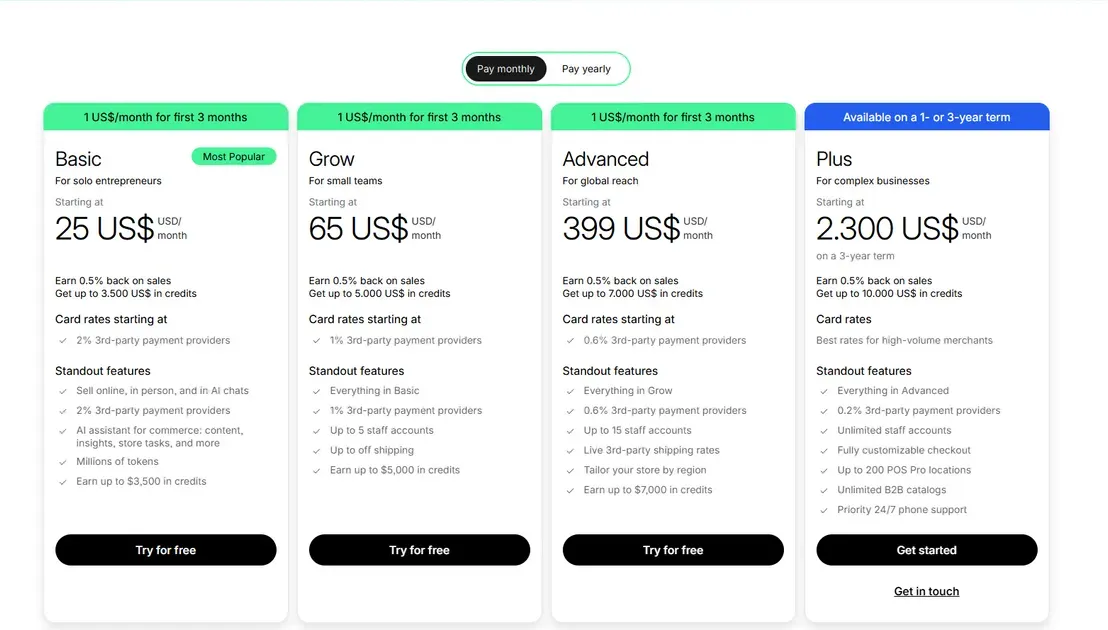
For beginners launching a small store or side business, that price difference can feel significant. However, the cheaper price on paper does not always reflect the actual long-term cost.
As businesses grow, many Wix users eventually need higher-tier plans to unlock features such as:
Advanced analytics
Expanded storage
More robust eCommerce tools
Higher scalability limits
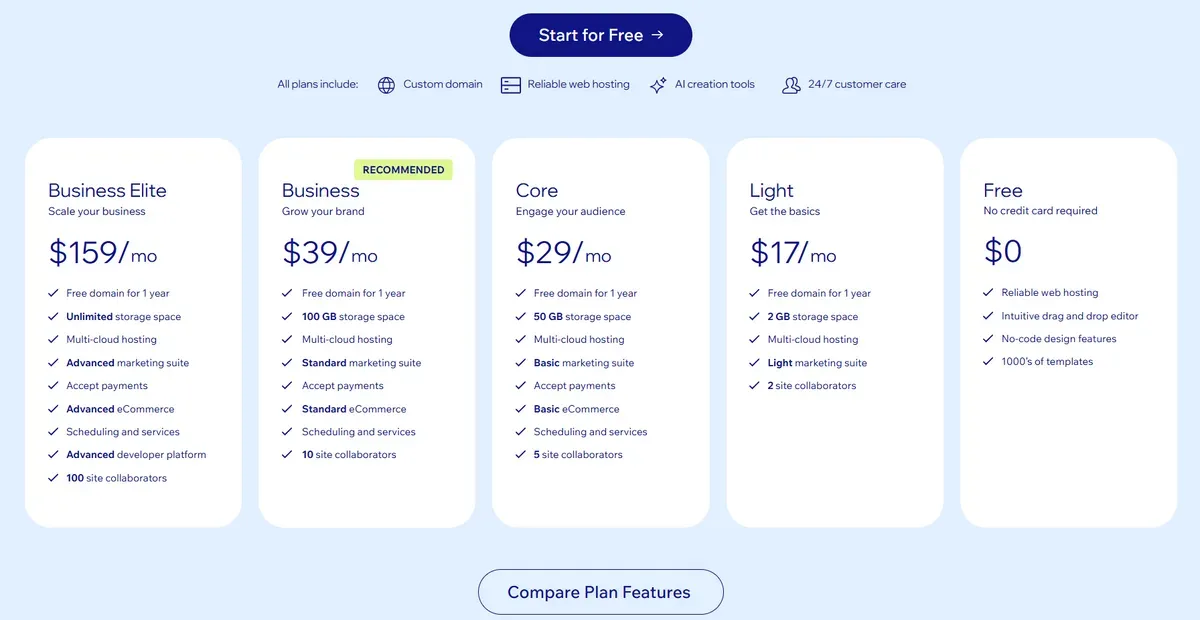
Shopify, meanwhile, is designed around online retail from the start; the advanced pricing plan or plus pricing plan seem high. Even its lower-tier plans already include infrastructure built specifically for selling products at scale.
So while Wix may offer a lower barrier to entry, Shopify often provides stronger long-term value for serious eCommerce brands.
The App Tax vs. Native Features
One of the biggest hidden differences in the Shopify vs Wix pricing debate is the cost of extra tools and integrations. Although Shopify offers a powerful eCommerce ecosystem, many important features are not included by default. A realistic Shopify store often requires several paid apps to run efficiently, especially as the business grows.
Common paid Shopify apps include:
Product review systems
Upsell and cross-sell tools
Email capture popups
Subscription management
Loyalty programs
Advanced product filters
Because of this, many Shopify merchants end up spending $100+/month beyond the base subscription plan.
In comparison, Wix includes several business tools natively inside the platform. Depending on your business type, you may not need as many third-party apps to get started.
Built-in Wix features often include:
Booking and appointment systems
Basic email marketing
Newsletters
Forms and lead capture
Simple customer automation
This gives Wix a major advantage for small businesses, personal brands, coaches, salons, and service providers looking to keep monthly costs predictable.
However, Shopify still wins when it comes to advanced eCommerce scalability. Its app marketplace is significantly larger and better suited for businesses running complex retail operations, dropshipping stores, subscription models, or international sales.
Transaction Fees
Shopify transaction fees are extra fees Shopify charges when you use a third-party payment provider instead of Shopify Payments.
In simple terms:
If you use Shopify Payments → you only pay normal Shopify credit card processing fees.
If you use another payment gateway (like PayPal, Stripe in some regions, or local payment providers) → Shopify adds an additional transaction fee on top.
| Shopify Plan | Third-Party Transaction Fee |
|---|---|
| Basic | 2% |
| Grow | 1% |
| Advanced | 0.60% |
| Plus | 0.20% |
Wix does not charge the same type of additional third-party transaction fee that Shopify does. Instead, Wix mainly charges standard payment processing fees through Wix Payments or whichever payment gateway you use.
For U.S. merchants using Wix Payments, the standard online payment processing fee is typically: 2.9% + $0.30 per online transaction.
So with Wix:
If you use Wix Payments → you pay standard card processing fees only
If you use PayPal or Stripe → you generally pay their normal processing fees, without Wix adding another platform penalty fee
Design & Customization
How your store looks and feels can make or break a customer's trust. While both Shopify and Wix let you build a professional storefront, they use completely different design systems. One gives you absolute freedom to place items anywhere, while the other keeps you within safe, structured lanes to protect your site’s layout.
| Design Factor | Shopify | Wix | Winner |
|---|---|---|---|
| Ease of Customization | Structured theme editing | True drag-and-drop editing | Wix |
| Creative Freedom | Moderate | Very high | Wix |
| eCommerce Optimization | Excellent | Good | Shopify |
| Mobile Store Performance | Strong | Good but design-dependent | Shopify |
| Beginner Friendliness | Moderate learning curve | Easier for non-technical users | Wix |
| Store Scalability | Better for large stores | Better for smaller websites | Shopify |
Wix Studio
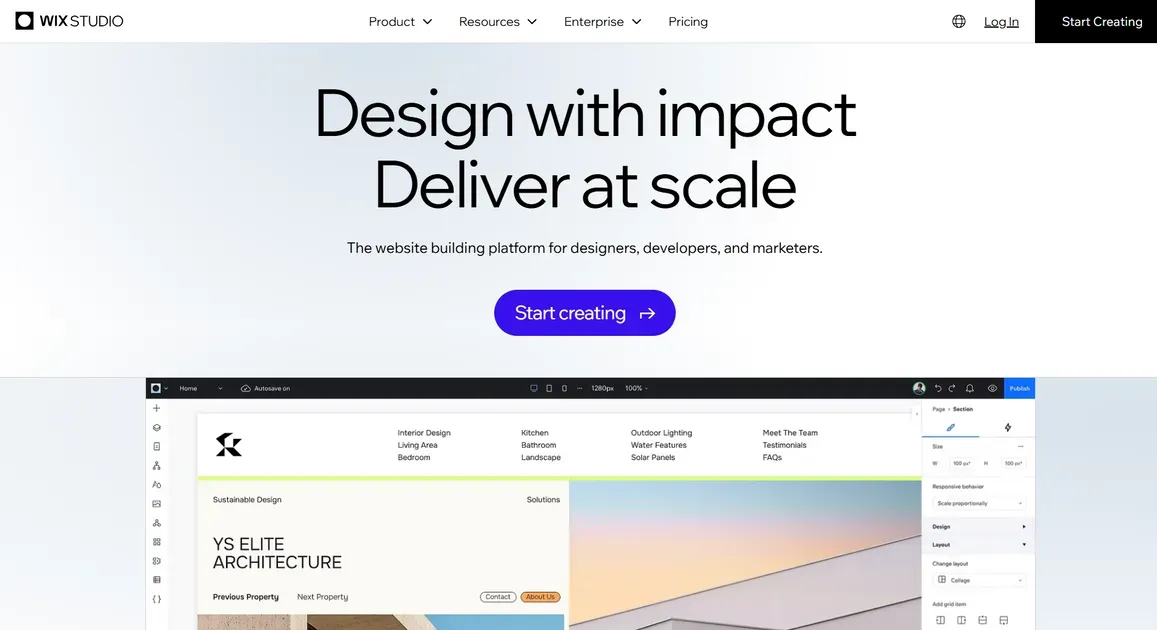
Wix has always been famous for its "drag-and-drop" freedom, but Wix Studio takes things to an advanced level. It is built specifically for designers and creators who want total control over every single pixel on the screen.
Absolute Design Freedom: You can grab any image, button, or block of text and drag it exactly where you want it. There are no rigid grids holding you back.
Advanced Responsive Controls: Wix Studio allows you to custom-design how your website looks on different screen sizes (desktop, tablet, and mobile). You can set custom breakpoints, scale text proportionally, and use advanced visual effects.
The Downside: Having too much freedom can be dangerous. If you are not careful, moving an element just a few inches can accidentally break your layout or make your text overlap on mobile screens.
Shopify
Shopify handles design like a disciplined retail expert. Instead of a free-form canvas, Shopify uses a structured, section-based editor powered by its Liquid templating system.
Guardrails for Retail: You design your store by stacking pre-made sections (like a banner, a product carousel, or a text block). You can easily move these sections up or down, but you cannot drag a button into the middle of nowhere.
Unbreakable Mobile Layouts: Because the layout is structured, it is almost impossible to break your website. No matter what changes you make, Shopify automatically ensures your store stays perfectly clean, fast, and easy to buy from on mobile phones.
The Downside: It can feel restrictive. If you want a unique, highly custom page layout that doesn't fit into standard blocks, you will need to hire a developer to write custom code.

E-Commerce Power & Scalability
This is where Shopify clearly outperforms Wix. While both platforms support online selling, Shopify is built specifically for scaling eCommerce businesses. Wix works well for small stores, but it becomes more limited as operations grow.
| Feature | Shopify | Wix | Winner |
|---|---|---|---|
| Multi-Location Inventory | Advanced | Limited | Shopify |
| Dropshipping Integrations | Excellent | Basic | Shopify |
| Multi-Currency Selling | Strong | Limited | Shopify |
| Flash Sale Performance | Excellent | Moderate | Shopify |
| Subscription Selling | Advanced | Limited | Shopify |
| Scalability for Large Stores | Excellent | Moderate | Shopify |
| Customer Support Ecosystem | Large global ecosystem | Smaller ecosystem | Shopify |
Inventory Management and Multi-Channel Retail
Shopify is much stronger for managing large-scale retail operations. In the Shopify vs Wix comparison, Wix works well for smaller stores, but Shopify is far better for scaling across multiple sales channels and global markets.
| Capability | Shopify (The Digital Walmart) | Wix (The Boutique Gift Shop) |
|---|---|---|
| Inventory Power | Built to track thousands of items scattered across different warehouses without breaking a sweat. | Built to track a small closet of inventory; gets messy if you throw too many items at it. |
| Selling Everywhere | Connects seamlessly to TikTok, Instagram, Amazon, and physical store registers so you never accidentally double-sell an item. | Lets you connect to Facebook or Instagram, but it takes more manual clicking to keep everything synced. |
Checkout Reliability and Complex Business Models
When it comes to checkout reliability and traffic spikes, we can have a quick comparision between Shopify and Wix:
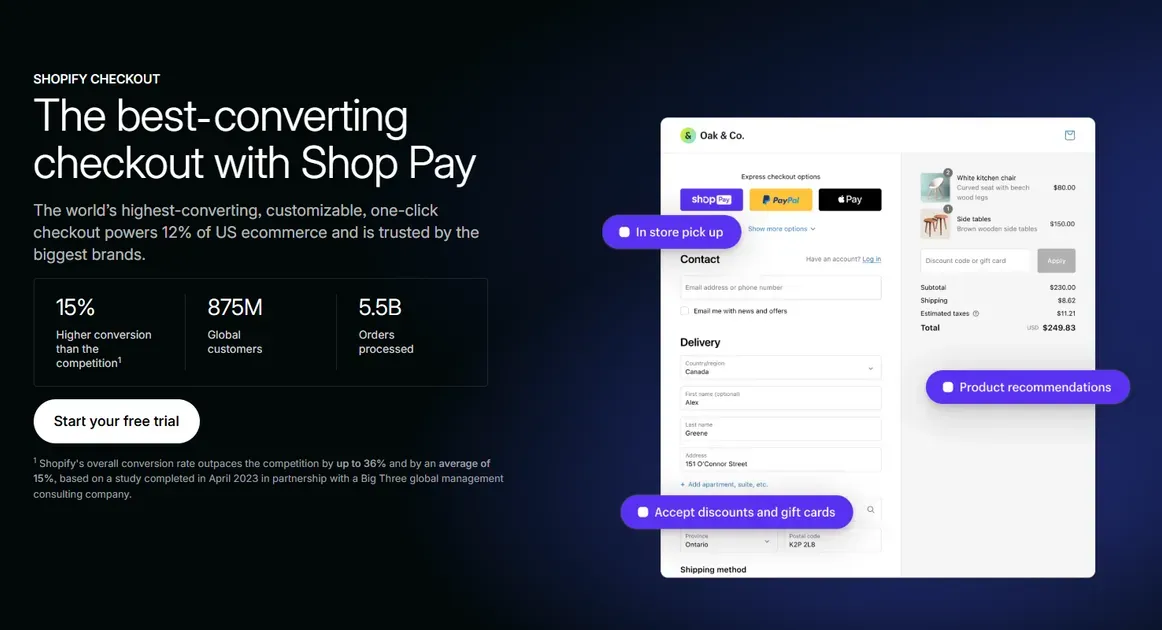
Shopify: The industry gold standard. Built with 99.99% uptime to handle massive traffic spikes (like viral flash sales or Black Friday) without crashing. Includes Shop Pay, a one-click checkout that increases conversion speeds by up to 50%.
Wix: Highly secure and perfectly reliable for steady, day-to-day traffic. However, it is not engineered to handle thousands of shoppers hitting the checkout button at the exact same split-second.
In terms of complex business models:
Dropshipping: Shopify is the market leader, seamlessly syncing thousands of global supplier products. Wix offers basic integrations (like Printful) that work great for smaller, curated collections.
Subscriptions: Shopify supports highly complex subscription models (like customizable build-a-box or flexible delivery tiers via apps). Wix has simple, built-in recurring payments ideal for basic monthly boxes or memberships.
B2B & International: Shopify wins easily with native multi-currency tools, localized tax settings, and dedicated wholesale pricing tiers. Wix handles basic multi-currency setup but lacks enterprise-level B2B features. Brands serving retailers can learn how to set up a wholesale store on Shopify from this point.
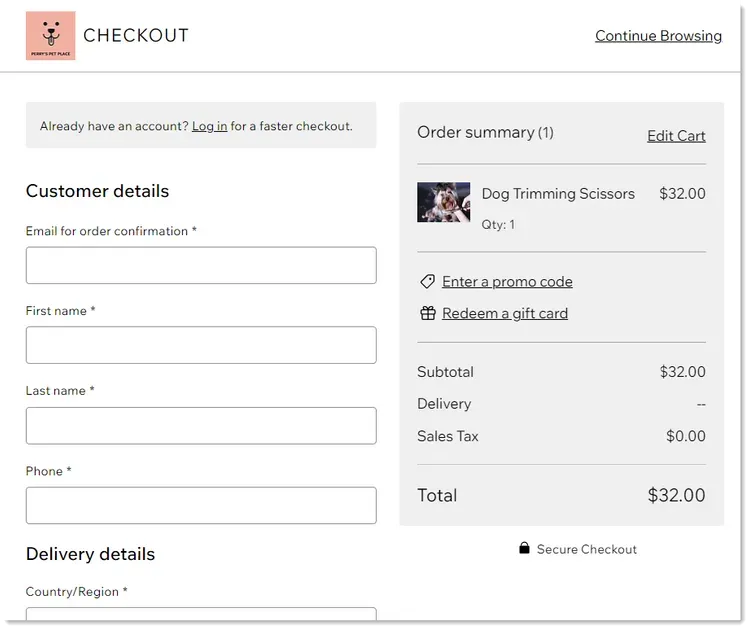
Customer Support
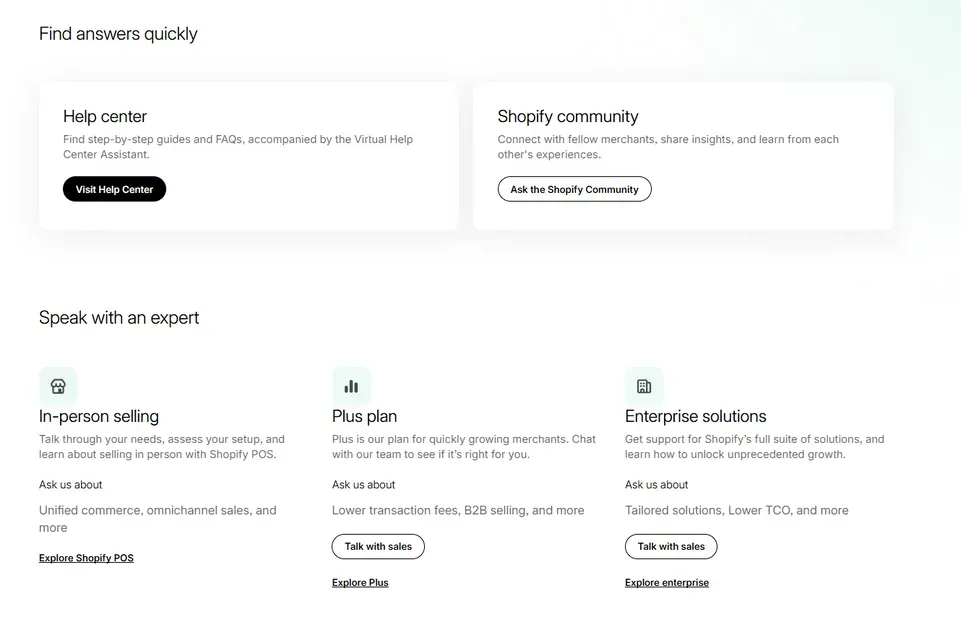
When your site goes down or a transaction fails, support speed matters. Both platforms offer strong support, but they deliver it differently.
Shopify’s support is optimized for fast, data-driven retail troubleshooting.
24/7 Live Chat: Available on all plans. Agents can instantly access your store backend to fix payment, inventory, or order glitches.
The Phone Catch: Phone callbacks are strictly locked behind high-tier plans (Shopify Plus and Retail). Standard merchants must use chat.
Built-in AI Tool (Sidekick): Sidekick lives in your admin dashboard. It can automate backend tasks for you, like setting up discounts or pulling sales reports.
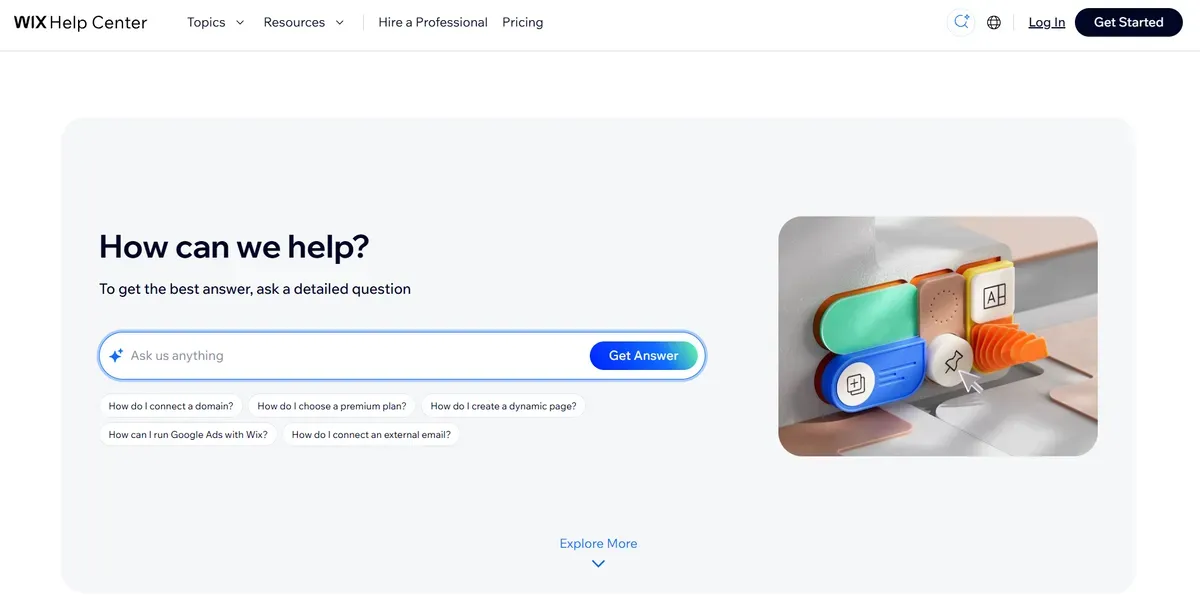
Wix prioritizes direct, verbal communication for design and setup help.
Phone Callbacks for All: You can get a real human on the phone 24/7 (in English) on any plan—even free accounts.
Multilingual Help: Offers robust phone and chat support across multiple languages during local business hours.
Design-Focused: Great for getting step-by-step verbal guidance on layout adjustments, booking setups, or domain routing.
Both Shopify and Wix offer customer support, but Shopify has a much larger eCommerce ecosystem. This makes it easier to solve technical issues and scale your store over time.
Best Use Cases: Which Businesses Should Choose Shopify vs Wix?
When deciding between these two platforms, Shopify vs Wix, the choice usually comes down to your business model and growth plans. Here is a breakdown of exactly who wins in which scenario.
Which Businesses Should Choose Shopify?
Shopify is built to scale. If your primary goal is high-volume retail, complex shipping, or global expansion, it is the clear winner.
Fashion, beauty, and electronics stores: These industries require robust inventory management, variants (size, color, material), and a checkout experience that handles high traffic without breaking.
Dropshipping and subscription businesses: Shopify integrates natively with leading dropshipping suppliers (like DSers) and subscription management apps, making it incredibly easy to automate your fulfillment.
B2B wholesalers and international brands: Shopify handles multi-currency storefronts, international shipping zones, and wholesale pricing tiers seamlessly out of the box.
Example: Imagine a fast-growing clothing boutique starting out with 50 products that plans to scale to 5,000 items, launch a subscription box, and ship globally. Shopify provides the architecture to support that massive growth without needing to migrate platforms later.
Which Businesses Should Choose Wix?
Wix is a design-first platform. It is ideal for businesses where the website's primary job is to book clients, showcase visual work, or sell a small, curated selection of goods.
Service businesses (salons, coaches, photographers): Wix shines here because of its built-in booking systems, calendar syncing, and appointment management tools.
Personal brands and portfolio websites: If you need complete creative control over your layout to showcase your work, Wix’s drag-and-drop editor makes it effortless.
Small stores with limited SKUs: Perfect for local shops, creators selling a few pieces of merch, or artisans with low inventory volume who don't need advanced back-end logistics.
Example: A local yoga studio that sells class packages, handles private lesson bookings, and offers a small curated collection of branded mats and apparel would thrive on Wix. The focus is on the schedule and community, not complex inventory tracking.
FAQs
Is Wix better for SEO than Shopify?
Not really because Wix and Shopify just serve different needs. Wix is perfect for beginners with its step-by-step setup checklists. Shopify wins for large stores because it has cleaner code, faster page speeds, and automatically prevents duplicate content issues when you have thousands of product variants.
Can I migrate my store from Wix to Shopify later?
Yes, you can transfer Wix to Shopify but you will have to rebuild your design. You can easily export your products and customer data via CSV files. However, because their layouts are built differently, you must redesign your site on Shopify and set up 301 redirects so you don't lose your Google rankings.
Which platform is better for small businesses?
Choose Wix: If you sell services (coaching, salons, photography) that need booking calendars, or if you sell fewer than 50 products.
Choose Shopify: If you are 100% focused on retail or dropshipping, or plan to grow a massive product catalog in the future.
Conclusion
Choosing Shopify vs Wix comes down to identifying the backbone of your business. Align your choice with your long-term business goals: if you are building an online storefront to support your brand, Wix is the perfect fit. If the storefront is your brand, Shopify is the way to go.

Hey! I'm Linda Bui. Join me as we explore tips and tutorials about Shopify apps and Shopify themes for your Shopify store.
Start Building Trust Today
Install the Product Reviews app to improve your store's credibility and boost sales with real customer reviews.
Get Started with Zero CostWhat to not miss out on our blog
Gain insightful knowledge and invaluable experiences from dedicated experts.
_1200x630.webp)
What Is Shopify Collabs? How It Works and How Brands Use It in 2026
Discover what is Shopify Collabs, how it automates affiliate tracking, and how to use it to scale influencer marketing from your dashboard. Read right now!
_1200x630.webp)
_1200x630.webp)
Newsletter
Get all the stories you need-to-know from the most powerful name in news delivered first thing every morning to your inbox